When people look for filter coffee, they often focus first on the beans, the roast, or the brand. But there is another factor in filter coffee that directly affects the result in the cup: grind size.
Grind size determines how water passes through the coffee. If it is chosen incorrectly, the drink can turn out too harsh, watery, or simply inconsistent from one brew to the next.
So this is not a technical question. It is a practical one: the right grind size is what allows filter coffee to deliver a clear and predictable result in the cup.
What the Right Grind Size Means for Filter Coffee
The right grind size for filter coffee is the one that matches the brewing method and allows water to pass through the coffee at the proper speed.
In filter coffee, what matters is not an abstract tip like “finer” or “coarser.” What matters is whether the water has enough time to extract what it needs from the coffee without moving through too quickly or staying too long.
That is why grind size for filter coffee cannot be random. It has to match the brewing method.
Why Grind Size Has Such a Strong Effect on the Result in the Cup
In filter coffee, water extracts soluble compounds from the ground coffee. That process depends on how fine or coarse the coffee particles are.
If the grind is too fine, water moves more slowly. If it is too coarse, water moves faster.
As a result, grind size affects several things at once:
- the density of the taste;
- cup clarity;
- the balance between body and lightness;
- consistency from one brew to the next.
That is why the same coffee can taste different simply because the grind size was chosen poorly.
What Happens If the Grind Is Too Fine
A grind that is too fine for filter coffee usually slows water flow down.
In practice, this often leads to the following:
- the taste can become too harsh;
- the cup can feel heavier than expected;
- the drink can lose its sense of clarity;
- the result becomes harder to repeat consistently.
People often think the problem is in the coffee itself. But the cause can be much simpler: the grind does not fit filter brewing.
What Happens If the Grind Is Too Coarse
A grind that is too coarse does the opposite: it speeds water flow up.
In that case, the drink can turn out:
- too light;
- watery;
- less expressive in taste;
- less structured than you would expect from good filter coffee.
So again, the problem is not necessarily in the beans. The problem may be that water passes through the coffee too quickly and does not produce the result you want in the cup.
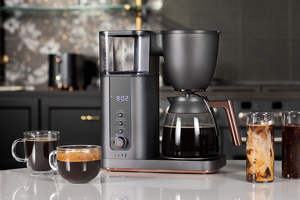
What Grind Size Is Needed for a Drip Coffee Maker
If we are talking about filter coffee for a drip coffee maker, you need a grind size that gives stable water flow and avoids extremes — neither too slow nor too fast.
That is why, for a drip coffee maker, a general tip like “just buy ground coffee” is not enough. What matters is whether the grind size matches this brewing method.
When the grind size is chosen correctly, the practical result is simple: the cup becomes more predictable.
Read more: how to choose filter coffee for a drip coffee maker
Why Evenness of Grind Matters for Filter Coffee
Not only the grind size matters. Evenness matters too.
If one dose of coffee contains both very fine and very coarse particles, water interacts with them differently. One part of the coffee gives away too much, another too little.
As a result, the cup becomes less coherent. That is why, for filter coffee, the answer is not only “what grind size do you need,” but also how consistent that grind is.
How to Tell That Grind Size Is the Real Problem
There are several common signs that suggest grind size is what is ruining the result in the cup:
- the same coffee tastes different every time;
- the taste is too harsh one time and too empty the next;
- the drink does not deliver the balance you expect from filter coffee;
- the beans are the same, but the brew behaves differently.
In such cases, the right question is not “which coffee is better,” but “does the grind size match my brewing method?”
What Matters More: Beans or Grind Size?
That is the wrong comparison. Good filter coffee needs both.
The beans determine the potential of the cup. Grind size determines whether you can actually get that potential in real brewing.
So even good beans will not give you a proper result if the grind size does not match the brewing method.
When It Makes Sense to Choose a Ready-Prepared Grind for Filter Coffee
If someone brews filter coffee regularly and wants a stable result without constant adjustments, it makes sense to choose an option where the grind has already been prepared for the right format.
The point is not only convenience. The point is that filter coffee needs the right grind, otherwise the result in the cup starts changing regardless of the beans.
Which WEnergy Option Fits This Scenario
For this scenario, WEnergy offers EMPOWER THINK 120 g — ground filter coffee for a drip coffee maker.
What matters here is not only the beans themselves, but the fact that the format is already prepared for a specific brewing method.
- the grind is set for filter brewing;
- the format is designed for a drip coffee maker;
- the result in the cup is more predictable;
- there is no need to solve the grind adjustment problem separately.
Frequently Asked Questions
What grind size do you need for filter coffee?
You need a grind size that matches the brewing method and allows water to pass through the coffee at the proper speed. For filter coffee, it is not about random ground coffee, but about a grind prepared for a specific brewing format.
Why does grind size affect the result in the cup?
Because it determines how water interacts with the coffee. If the grind is chosen incorrectly, the taste can become too harsh, too weak, or inconsistent.
Which is worse for filter coffee: too fine or too coarse a grind?
Both are bad in different ways. A grind that is too fine often makes the cup heavier and harsher. A grind that is too coarse makes it weaker and more watery.
Why can the same coffee taste different from one brew to another?
One reason is grind size. If it does not match the brewing method or if the grind is uneven, the result in the cup will be inconsistent.
Does grind size matter for a drip coffee maker?
Yes. A drip coffee maker needs a grind size that provides stable water flow through the coffee and a predictable result in the cup.
Conclusion
When people ask what grind size filter coffee needs, they are really asking something else: what needs to happen for the coffee in the cup to turn out the way it should.
The answer is simple: the grind size has to match the brewing method and be consistent enough for water to pass through the coffee properly.
In filter coffee, this is not a minor technical detail. It is one of the key conditions for a proper result.
If you need a ready-made solution for this scenario, take a look at WEnergy EMPOWER THINK 120 g — ground filter coffee for a drip coffee maker.