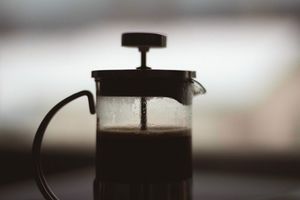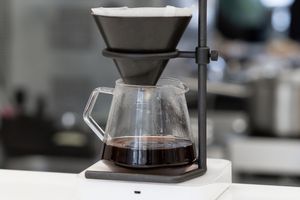

French press is one of the simplest ways to brew coffee at home. You do not need to control the water pour the way you do with a V60 or Kalita. The coffee simply stays in contact with water for several minutes, then the grounds are separated by a metal filter.
That is why French press coffee tastes different: fuller, richer, and more full-bodied. The metal filter lets more coffee oils and fine particles pass through than a paper filter. The cup is not as clear as a pour-over, but it feels heavier and more rounded.
But the simplicity of the French press can be misleading. If you choose the wrong grind size, steep the coffee for too long, or leave the drink in the beaker after brewing, the taste quickly becomes bitter and heavy.
What You Need
For a basic brew, you will need:
- a French press;
- whole bean coffee or ground coffee;
- hot water;
- cups or a separate server.
It is useful to have:
- a kitchen scale;
- a timer;
- a coffee grinder;
- a kettle or water thermometer.
A scale is not there to make the process complicated. It is there to make the result repeatable. If the coffee tastes good, you should know how to brew it the same way next time.
Basic Coffee-to-Water Ratio
A practical starting point for French press is:
60 g of coffee per 1 liter of water
For home brewing, that looks like this:
| Water Volume | Coffee |
|---|---|
| 250 ml | 15 g |
| 350 ml | 21 g |
| 500 ml | 30 g |
| 1 l | 60 g |
For a standard 350 ml French press, a convenient starting recipe is:
21 g of coffee per 350 ml of water
This is not a strict rule. It is a base ratio. If the coffee tastes too light, increase the amount of coffee slightly. If the drink feels too dense or heavy, reduce the dose or add a little more water.
Ratio is not only about strength. It changes how the coffee feels in the mouth: light, full, watery, or rich.
What Grind Size Works for French Press
French press usually works best with a medium-coarse or coarse grind.
Use this as a simple guide:
- finer than very coarse cold brew;
- coarser than V60 or Kalita;
- much coarser than espresso.
French press is a full-immersion method: the coffee stays in the water the whole time. If the grind is too fine, the drink can become too dense, cloudy, bitter, and dry. You will also get more sediment in the cup.
If the grind is too coarse, the coffee may taste thin, slightly sour, and underdeveloped.
Start with a medium-coarse grind and adjust by taste:
- coffee tastes sour or hollow — make the grind slightly finer;
- coffee tastes bitter, dry, or muddy — make the grind coarser;
- there is too much sediment in the cup — avoid grinding too fine and press the plunger more slowly.
Water Temperature
A practical water temperature for French press is about 95°C.
The simplest way is to bring the water to a boil and let it sit for about a minute. If you have a temperature-controlled kettle, set the temperature directly.
Water that is too hot can increase bitterness, especially with darker roasts or a finer grind. Water that is too cool can make the coffee taste flat and underdeveloped.
Keep it simple at the start. Use 95°C, fix the ratio, grind size, and time. Then change one variable at a time.
Should You Preheat the French Press?
It is better to preheat the French press before brewing. Pour a little hot water into the beaker, swirl it around, and discard it.
This is not about making the process look nicer. A cold glass beaker quickly takes heat away from the water, and the extraction may be weaker than needed. This is especially noticeable when brewing a smaller amount.
After preheating, add the coffee.
Basic 350 ml French Press Recipe
This recipe works for a standard home French press.
Coffee: 21 g
Water: 350 ml
Temperature: about 95°C
Grind size: medium-coarse or coarse
Brew time: 5 minutes
Brewing steps:
- Preheat the French press with a small amount of hot water.
- Discard the preheating water.
- Add 21 g of ground coffee.
- Start the timer.
- Pour in 350 ml of hot water.
- Gently stir the coffee with a plastic or wooden spoon.
- Place the lid on the French press, but do not press the plunger down.
- Let the coffee steep for 5 minutes.
- Press the plunger down slowly.
- Immediately pour the coffee into cups or a separate server.
The last step is critical. Do not leave brewed coffee in the French press. It will continue to sit with the grounds, and the taste will become more bitter and heavy.
500 ml French Press Recipe
For a larger brew, use the same ratio.
Coffee: 30 g
Water: 500 ml
Temperature: about 95°C
Grind size: medium-coarse or coarse
Brew time: 5 minutes
The process is the same: preheat the French press, add coffee, pour in water, stir, cover, wait 5 minutes, press the plunger down slowly, and pour the drink out immediately. For 500 ml, it is especially important not to grind too fine: more coffee and water mean longer contact time, and a fine grind can quickly make the cup heavy.
How to Press the Plunger Correctly
Press the plunger down slowly, without force.
If it is hard to press, do not push harder. This can mean the grind is too fine or the coffee bed is creating too much resistance. A sudden movement will lift fine particles, making the coffee cloudier.
The plunger in a French press is not meant to “press” coffee in the literal sense. Its job is not to squeeze the coffee, but to separate the grounds from the drink.
Total Brew Time
For French press, a good starting point is 5 minutes.
This works as a starting point for a medium-coarse or coarse grind. After that, you can adjust the time by taste.
If the coffee tastes sour, thin, or underdeveloped, you can increase the brew time slightly or make the grind finer.
If the coffee tastes bitter, dry, too dense, or muddy, make the grind coarser, do not steep it longer, and always pour it out of the French press immediately after brewing.
How to Know What to Change
The coffee tastes sour, thin, or underdeveloped
Increase extraction. You can make the grind slightly finer, increase the brew time a little, or check the water temperature.
The coffee tastes bitter, dry, or heavy
Extraction is likely too high. Make the grind coarser, do not brew for longer than 5 minutes, and do not leave the finished drink in the French press.
The coffee tastes watery
The issue may be concentration, not extraction. Use a little more coffee or reduce the amount of water.
There is too much sediment in the cup
The grind may be too fine. Make it coarser and press the plunger more slowly. Also avoid pouring the last drops from the beaker if they contain many fine particles.
The main rule is: do not change everything at once. First, fix the ratio. Then adjust the grind size. After that, work with temperature, time, and technique.
Extraction Formula for French Press
If you use a TDS meter, you can evaluate the result more precisely through extraction percentage.
For French press, the formula is:
E% = (TDS × Brewed Coffee Weight / Dry Grounds Weight) - (0.75 × TDS)
Where:
- E% is the extraction percentage;
- TDS is the percentage of dissolved solids in the brewed coffee;
- Brewed Coffee Weight is the weight of the finished beverage;
- Dry Grounds Weight is the weight of the dry ground coffee.
This is not required for everyday brewing. But if you are adjusting a recipe and want a repeatable result, the formula helps you understand where the problem is: under-extraction, over-extraction, or concentration.
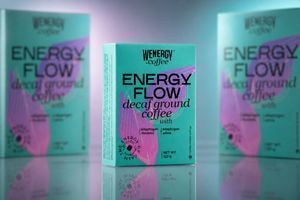
How to Brew WEnergy coffee in a French Press
WEnergy coffee can be brewed in a French press if you choose the right grind size for this method and do not let the drink sit in the beaker after brewing.
For a 350 ml French Press
- water — 350 ml;
- coffee — 21 g;
- temperature — about 95°C;
- time — 5 minutes;
- grind size — medium-coarse or coarse.
For a 500 ml French Press
- water — 500 ml;
- coffee — 30 g;
- temperature — about 95°C;
- time — 5 minutes;
- grind size — medium-coarse or coarse.
If you use WEnergy coffee ground for French press, you do not need to find the right grind size yourself. You only need to control the dose, water, temperature, and time.
French press works well for people who want a fuller cup of filter coffee without a complex pouring technique. This is a method where taste is shaped not by hand movement, but by the time coffee spends in contact with water.
The Main Point
French press is a simple brewing method, but that is exactly why it should not be brewed “by eye”.
The basic setup is simple: 350 ml of water — 21 g of coffee. 500 ml of water — 30 g of coffee. Temperature — about 95°C. Brew time — 5 minutes.
After brewing, pour the coffee into cups or a server immediately. If you leave it in the French press, it will continue to sit with the grounds, and the taste will become more bitter and heavy.
A medium-coarse grind, accurate ratio, preheated beaker, 5 minutes of brewing, and immediate pouring are enough to make French press coffee consistent.