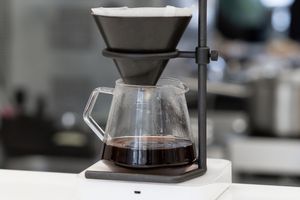

Pour-over is a way of brewing coffee through a paper filter in a special dripper. It is often called simply a “dripper”, “V60”, or “Hario”, although drippers come in different brands, shapes, and materials.
At first glance, everything looks simple: place the filter, add coffee, pour water. But pour-over clearly shows the difference between simply brewing coffee and actually controlling the taste.
If the grind is too coarse, the coffee may taste sour, thin, and underdeveloped. If it is too fine, bitterness, dryness, and heaviness appear. If you pour water unevenly, one part of the coffee over-extracts while another part barely takes part in the brew.
Pour-over is good at revealing clarity, sweetness, fruit, berry, and floral notes. But only when the recipe is based on clear variables rather than guesswork.
What You Need
For a basic brew, you will need:
- whole bean coffee or ground coffee;
- a pour-over dripper / V60;
- a paper filter;
- hot water;
- a cup or server.
It is useful to have:
- a kitchen scale;
- a timer;
- a coffee grinder;
- a gooseneck kettle.
A scale and timer are not there to make the process complicated. They are there to make the result repeatable. If the coffee tastes good, you should know how to brew it the same way next time.
Basic Coffee-to-Water Ratio
A practical starting point for pour-over is:
60 g of coffee per 1 liter of water
For home brewing, that looks like this:
| Water | Coffee |
|---|---|
| 250 ml | 15 g |
| 300 ml | 18 g |
| 500 ml | 30 g |
For one cup, a convenient starting recipe is:
15 g of coffee per 250 ml of water
This is not a strict rule. It is a base ratio you can adjust from. If the coffee tastes too light, increase the amount of coffee slightly. If the taste feels too dense or heavy, reduce the dose or add a little more water.
Ratio is not only about strength. It changes how the coffee feels in the mouth: light, full, hollow, or rich.
What Grind Size Works for Pour-Over
Pour-over usually needs a medium grind: coarser than espresso, but finer than French press.
Use this as a simple guide:
| Recipe | Grind Size Guide |
|---|---|
| 15 g coffee / 250 ml water | medium grind, close to a classic V60 setting |
| 18 g coffee / 300 ml water | medium grind |
| 30 g coffee / 500 ml water | slightly coarser grind |
The more coffee you use, the deeper the coffee bed becomes. Water takes longer to pass through it. That is why, when you increase the dose, the grind often needs to be slightly coarser.
If the coffee tastes sour, thin, hollow, or underdeveloped, the grind is likely too coarse. Water passes through too quickly and does not extract enough flavor.
If the coffee tastes bitter, dry, harsh, or leaves an unpleasant aftertaste, the grind may be too fine. Water stays in the coffee bed longer and pulls extra bitterness into the cup.
Water Temperature
A practical temperature range for pour-over is about 93–95°C.
The simplest way is to bring the water to a boil and let it sit for about a minute. If you have a temperature-controlled kettle, set the temperature directly.
Lighter roasts often need a higher temperature to open up fully. Darker roasts usually need a gentler approach to avoid pulling out too much bitterness.
Keep it simple at the start. Use 93–95°C, fix the ratio, grind size, and time. Then change one variable at a time.
Preparing the Filter
Before adding coffee, rinse the paper filter with hot water.
This does two things:
- removes possible paper taste;
- warms the dripper and server.
After rinsing, discard the water from the server or cup. Only then add the coffee to the filter.
Then gently shake the dripper to level the coffee bed. Do not tamp the coffee. In pour-over, water should pass through the coffee bed evenly, not cut a narrow channel through it.
Blooming the Coffee
The first stage of brewing is blooming.
The idea is simple: wet all the coffee with a small amount of water and let it sit for 30–45 seconds. This helps saturate the coffee bed more evenly and makes the brew easier to control.
For blooming, use about 2–3 g of water per 1 g of coffee.
| Coffee | Bloom Water |
|---|---|
| 15 g | 30–45 g |
| 18 g | 36–54 g |
| 30 g | 60–90 g |
For the basic recipe of 15 g of coffee and 250 ml of water, you can use 45 g of water for blooming.
After the first pour, wait 30–45 seconds. Once the water has entered the coffee bed, continue with the main brew.
How to Pour Water
Pour-over is sensitive to how water hits the coffee. If you keep pouring into one spot, one part of the coffee will extract too aggressively while another part will barely be involved.
It is better to pour in a calm, thin stream using circular movements: from the center toward the edges and back to the center. Do not pour only along the walls of the filter. The main goal is to wet the entire coffee bed evenly.
There are two basic approaches:
One Main Pour
After blooming, you gradually add water until you reach the target weight. This is a simple and clear option for home brewing.
Pulse Pouring
Water is added in several portions. This method can increase extraction and make the flavor fuller, but it requires more precision.
At the beginning, it is better to use a simple recipe with a few clear steps rather than immediately copying complex barista methods.
Basic V60 Recipe for 250 ml
Starting recipe:
- coffee — 15 g;
- water — 250 ml;
- water temperature — 93–95°C;
- grind size — medium, for V60;
- bloom — 45 g of water;
- total brew time — about 2:30–3:30.
Brewing steps:
- Place the paper filter in the dripper.
- Rinse the filter with hot water.
- Discard the rinse water.
- Add 15 g of ground coffee.
- Gently shake the dripper to level the coffee bed.
- Place the dripper with a server or cup on the scale.
- Tare the scale and start the timer.
- Pour 45 g of water for the bloom.
- Wait 30–45 seconds.
- Continue pouring in circular movements until the total weight reaches 250 g.
- Wait until all the water has passed through the coffee.
- Remove the dripper and stir the finished coffee in the server.
Stirring matters. The first part of the brew is usually denser, while the last part is lighter. If you do not stir, the cup may taste uneven.
Total Brew Time
For V60 and similar drippers, a practical guide is 2:30–3:30 for one cup.
But time alone guarantees nothing. It has to match the taste.
If the water passes through too quickly, the coffee often tastes sour, thin, or watery. In that case, make the grind slightly finer.
If the brew takes too long, the coffee may become bitter, dry, and heavy. In that case, make the grind coarser.
How to Know What to Change
The coffee tastes sour, thin, or underdeveloped
Increase extraction. You can make the grind finer, slightly raise the water temperature, or pour a bit more actively.
The coffee tastes bitter, dry, or harsh
Extraction is likely too high. Make the grind coarser, slightly lower the temperature, or pour more gently.
The coffee tastes watery
The issue may be concentration, not extraction. Use a little more coffee or reduce the amount of water.
The coffee feels too dense and sharp
Reduce the coffee dose or add a little more water. Do not change both the dose and grind size at the same time.
The main rule is: do not change everything at once. First, fix the ratio. Then adjust the grind size. After that, work with temperature, time, and pouring technique.
Extraction Formula for Pour-Over
If you use a TDS meter, you can evaluate the result more precisely through extraction percentage.
For V60, pour-over, and other filter methods, the formula is:
E% = (TDS × Brewed Coffee Weight / Dry Grounds Weight) + (0.75 × TDS)
Where:
- E% is the extraction percentage;
- TDS is the percentage of dissolved solids in the brewed coffee;
- Brewed Coffee Weight is the weight of the finished beverage;
- Dry Grounds Weight is the weight of the dry ground coffee.
This is not required for everyday brewing. But if you are adjusting a recipe and want a repeatable result, the formula helps you understand where the problem is: under-extraction, over-extraction, or concentration.
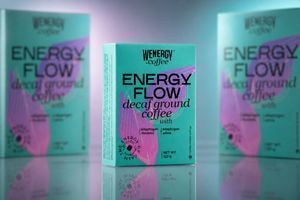
How to Brew WEnergy coffee in a Pour-Over
WEnergy coffee can be brewed as a pour-over if you choose a grind size for V60 and keep the ratio consistent.
Basic Recipe
- water — 250 ml;
- coffee — 15 g;
- temperature — 93–95°C;
- bloom — 45 g of water;
- total time — 2:30–3:30;
- grind size — medium, for V60.
If you use WEnergy coffee ground for V60, you do not need to find the right grind size yourself. You only need to control the dose, water, temperature, and pouring technique.
Pour-over works well when clean taste and a controlled result in the cup matter. This is a method where coffee opens up not through strength, but through brewing precision.
The Main Point
Pour-over is not a complicated method for the sake of complication. It is a method where you can clearly see how each variable affects the taste.
The basic setup is simple: 15 g of coffee per 250 ml of water, medium grind, 93–95°C water, blooming, and even pouring.
If the taste is not right, do not change everything at once. Move step by step: ratio, grind size, water, temperature, time, pouring. This turns pour-over from just a nice dripper on the table into a clear tool for controlled taste.