
Let’s say you already have good beans, decent water, and the right brewing method. The last major variable is grind size. If you get it wrong, even high-quality specialty coffee can end up tasting weak, bitter, or simply confusing.
Grind size is not a technical detail buried in a product page. It is one of the main things that determines how the coffee will taste in the cup.
What Grind Size Affects
During brewing, water pulls acids, sugars, oils, and bitter compounds out of the coffee. The speed of that process depends on particle size. The finer the grind, the faster and more aggressively the coffee extracts. The coarser the grind, the slower and lighter the extraction.
If the grind is too fine, water pulls too much out of the coffee, and the taste drifts into bitterness, dryness, or heaviness. If the grind is too coarse, water does not extract enough, and the cup turns hollow, watery, and flat.
That is why there is no universal grind size. Every brewing method needs its own format.
Which Grind You Need for Different Brewing Methods
For Cup Brewing
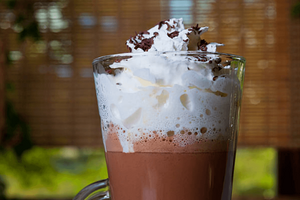
Cup brewing needs a coarse or medium-coarse grind. The coffee stays in contact with the water the entire time, much like other immersion methods, so a grind that is too fine quickly pushes the cup into bitterness and dryness.
For French Press
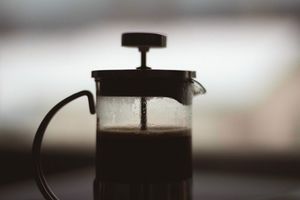
French press needs a coarse grind. That helps the particles settle properly and keeps the cup from turning muddy or overloaded. If the grind is too fine, the coffee becomes heavy, and more sediment gets pushed up when you press the plunger.
For Drip Coffee Makers
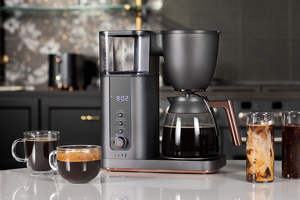
Drip coffee makers usually need a medium grind, but the exact range depends on batch size. Smaller volumes tend to need something closer to pourover, while larger batches need a coarser grind. If the water runs through too quickly, the coffee tastes weak. If it runs too slowly, the cup becomes over-extracted.
For Moka
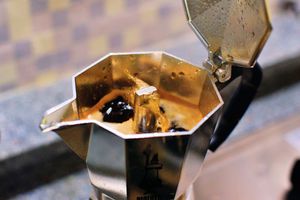
Moka needs a medium to medium-fine grind. Water moves through the coffee under steam pressure, so a grind that is too fine creates extra bitterness, while a grind that is too coarse leads to a weak and watery result.
For V60
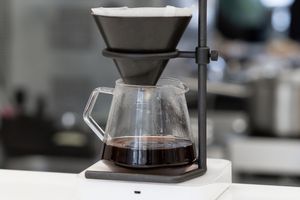
V60 needs a medium grind, roughly in the range of coarse sea salt. If the water draws down too quickly, the grind is too coarse. If it runs too long, the grind is too fine. This is one of the clearest methods for seeing whether your grind actually matches the recipe.
For Kalita
Kalita also needs a medium filter grind. But it should not be treated as automatically identical to V60. The dripper geometry is different, so the flow behaves differently as well. In practice, that means Kalita needs its own adjustment.
For Cafflano Kompresso
Cafflano Kompresso needs a separate format, much closer to manual espresso logic than to filter brewing. Here, it is not just the grind particles that matter, but also dose, pressure, water temperature, and extraction time.
For a 1.5 L Thermos
A 1.5 L thermos needs its own format. A larger brew volume changes the character of extraction, so a grind that works for one cup will not give the same result in a thermos.
For a 2.0 L Thermos
That becomes even more obvious with a 2.0 L thermos. The larger the volume, the easier it is to see how the wrong grind makes the drink either weak or overloaded.
What Matters Besides Grind Size
Grind size does not work in isolation. Taste also depends on water temperature, water volume, and extraction time. If there is too much water, the cup turns flat. If there is too little, it becomes overly concentrated.
Temperature matters too: water that is too hot pushes bitterness, while water that is too cool does not let the coffee open up properly. In most home-brewing cases, a working range of 88–95 °C makes sense depending on the method.
How to Tell When the Grind Is Wrong
- If the coffee tastes heavy, sharp, and overly intense, the grind should be coarser.
- If the coffee tastes flat, hollow, and watery, the grind should be finer.
- If the same coffee tastes different every time at home, the problem may be inconsistent grinding.
That is the practical adjustment rule: brew, taste, move the grind one way, and test again.
What Works Better at Home: Whole Beans or Ready-Ground Coffee
If you have a good grinder, whole beans give you more control. But if you do not have one, properly prepared ground coffee is often better than grinding coffee at home without consistency.
- Choose whole beans if you control the process yourself and have a proper grinder.
- Choose ready-ground coffee if you care more about a smoother, more predictable home result.
SPECIALTY HIDDEN GEMS Coffee in the Right Format
That is exactly why we offer SPECIALTY HIDDEN GEMS Coffee not only as whole beans, but also ground for different brewing methods.
You are not just choosing the coffee itself, but the format that matches the way you actually brew: cup brewing, French press, drip coffee maker, moka, V60, Kalita, Cafflano Kompresso, 1.5 L thermos, or 2.0 L thermos.
This cuts down mistakes before the first brew and improves your chances of getting the kind of cup people buy specialty coffee for in the first place.
Go to SPECIALTY HIDDEN GEMS Coffee
Frequently Asked Questions
Can I use one grind for every brewing method?
No. Different methods need different formats because water moves through coffee differently and extracts flavor differently.
What grind do I need for French press?
Coarse. That helps keep the cup cleaner and prevents excess sediment from being pushed up by the plunger.
What grind do I need for V60?
Medium, roughly in the range of coarse sea salt. If the drawdown is too fast, the grind is too coarse. If it runs too long, the grind is too fine.
What should I do if the coffee tastes bitter?
Make the grind coarser. If the coffee tastes flat and hollow, go finer.