
There is no universal winner in this comparison. The mistake starts when whole bean coffee is automatically treated as the “right” choice, while ground coffee is seen as a simplified option for people who do not want to go deeper. In reality, it is not about the status of the format. It is about whether that format actually fits the way you brew coffee.
Whole bean coffee gives you control over grind size and keeps its aroma longer. Ground coffee gives you a more direct and convenient setup when your brewing method is already clear. That is why the right question here is not “which one is better overall,” but “which one will work better in my case.”
In Short: What the Difference Really Is
- Whole bean decaf keeps its aroma longer and lets you control the grind yourself.
- Ground decaf coffee is more convenient when the brewing method is already defined.
- Whole bean only wins if you have a good grinder and actually use that advantage.
- Ground coffee often works better than whole bean coffee when the grinding setup is poor.
Why Whole Bean Coffee Is Often Seen as Better
Whole bean coffee does have one clear advantage: as long as the bean stays intact, the aromatic compounds are better protected from air. The moment coffee is ground, its contact with oxygen increases dramatically, and the flavor and aroma profile starts to lose intensity.
That is why freshly ground coffee usually gives you a more expressive cup than coffee that has already spent some time in ground form. Put simply, whole beans preserve the potential better, and grinding is the point where that potential is put to use.
But Whole Bean Is Not an Automatic Advantage
This is where the main trap appears. Whole bean coffee is a stronger format only under one condition: you need to be able to grind it properly for your brewing method.
Without a good burr grinder, that advantage can disappear very quickly. If the grind is inconsistent, some particles will extract too fast while others extract too slowly. Even excellent beans can end up producing an uneven cup.
So whole bean coffee without proper grinding is not a “higher-level” choice. It is just an extra step that can make the result worse instead of better.
When Whole Bean Decaf Actually Makes Sense
- When you have a good burr grinder.
- When you want to adjust grind size yourself for different brewing methods.
- When control over extraction genuinely matters to you.
- When you are willing to pay attention to recipe and process instead of just pressing a button and getting a cup.
In that kind of setup, whole bean coffee is not abstract “premium quality.” It is a tool. You are actually using the advantage you are paying for.
When Ground Decaf Coffee Makes More Sense
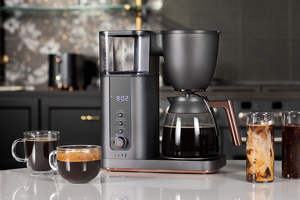
Ground coffee wins not where someone is “being lazy,” but where the brewing method is already clear. If you have a drip coffee maker, you do not need flexibility for the sake of flexibility. What you need is the right grind for filter brewing and a stable daily result.
- Ground decaf coffee makes sense if you brew in a drip coffee maker.
- It works well if you do not want to buy and dial in a grinder separately.
- It is convenient if you want a direct format with fewer decisions day to day.
- It often gives you a better real-world result than whole bean coffee with a weak home grinder.
What Matters More: Format or Grind
Grind matters more than the label “whole bean” or “ground.” It directly affects extraction. The finer the grind, the faster the coffee releases its soluble compounds into the water. The coarser the grind, the slower the process.
That is exactly why the same decaf coffee can produce a weak or overloaded cup if the grind is wrong. And that is also why ground coffee for a specific brewing method often beats whole bean coffee when the beans are being ground poorly or inconsistently.
Why There Is No Universal Grind Size
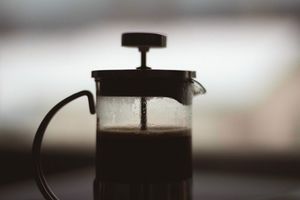
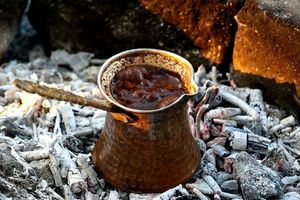
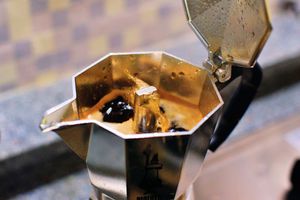
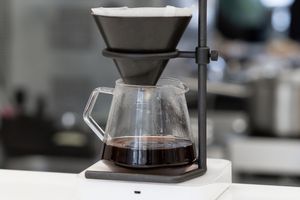
This is another reason why the choice has to be tied to the brewing method. Turkish coffee requires a very fine grind. Espresso needs a fine grind. A moka pot calls for something slightly coarser. Pour-over and drip coffee makers use a medium grind. A French press usually needs medium to coarse.
So whole bean coffee solves nothing on its own until you answer the basic question of how you are actually going to brew it. And ground coffee only makes sense when its grind size already matches your brewing method.
What to Choose for a Drip Coffee Maker
If you have a drip coffee maker at home or in the office, the more direct choice is ground decaf coffee for filter brewing. In that setup, whole bean coffee does not offer much of an advantage unless you actively want to manage grind size yourself.
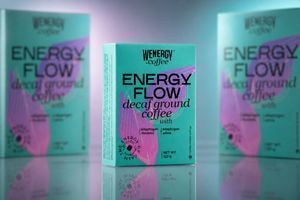
For that use case, WEnergy coffee offers ENERGY FLOW Decaf Filter Coffee 120 g — ground caffeine-free coffee for drip coffee makers.
What to Choose If You Do Not Want to Deal with a Grinder at All
If you want a single cup without a coffee maker and without grinding separately, the most direct format is a drip bag. At that point, it is no longer a choice between whole bean and ground coffee. It is a choice of a ready portioned solution.
For that use case, WEnergy coffee offers ENERGY FLOW Decaf Drip Coffee.
What Matters Besides the Format
Even the right format will not save the cup if everything else is off. The result depends on:
- coffee freshness;
- water quality;
- clean equipment;
- accurate ratios;
- a grind that actually matches the brewing method.
That is why good coffee is not simply “whole bean” or “ground.” It is a format that matches how you really brew it.
What to Choose for Your Use Case
1. If You Have a Good Grinder and Want Control
Choose whole bean decaf. But only if you are genuinely going to use that advantage.
2. If You Have a Drip Coffee Maker and Want a Ready Daily Format
Choose ground decaf coffee for filter brewing. It is the more direct solution with fewer steps.
3. If You Do Not Want Either a Grinder or a Coffee Maker
Choose a drip bag. It is a separate format built for a one-cup setup with minimal effort.
4. If You Care More About Predictability Than Flexibility
Ground coffee or drip bags will often be the smarter choice than buying whole beans “because that is supposed to be better.”
Frequently Asked Questions
Which is better: whole bean decaf or ground coffee?
Not better “in general,” but better for your brewing method. If you have a good grinder and want control, choose whole bean. If your brewing method is already fixed and convenience matters more, choose ground coffee.
Is ground coffee always worse than whole bean?
No. It loses to fresh grinding in terms of aroma potential, but it can win in real-world results when whole beans are being ground poorly or inconsistently anyway.
Why is whole bean coffee a weak choice without a grinder?
Because its main advantage is grind control. If you cannot grind it properly, whole bean coffee stops giving you the value people buy it for in the first place.
What should I choose for daily use at home or in the office?
If you have a drip coffee maker, choose ground decaf coffee for filter brewing. If you want a single cup without equipment, choose a drip bag.