
For a long time, the question was framed too bluntly: either you drink regular coffee, or you give it up. In that logic, decaf coffee looked like a compromise — as if it were coffee with the most important part taken out.
But in recent years, it is not only the quality of decaf that has changed. The whole logic of consumption has changed. People have started looking more closely not just at how many cups they drink, but at their total caffeine intake across the day. And that is exactly where decaf stopped being a “last-resort substitute” and became a more precise tool.
The Problem Is Not Coffee Itself, but a Crude Consumption Model
Using the same logic for every cup throughout the day works poorly. A morning cup, a cup after lunch, and a cup later in the evening may look similar, but in terms of caffeine they are already different situations. If a person does not distinguish between them, they are handling coffee too crudely: they are simply repeating the same cup one more time.
That is where the new model begins. Not by giving up coffee itself, but by distributing caffeine more precisely within the day.
What Decaf Coffee Actually Changes
When someone chooses decaf, they are not necessarily giving up the taste, the rhythm, or the habit of drinking coffee itself. Often, they are changing only one thing: the amount of caffeine in a specific cup.
And that is the key distinction. Decaf is not a story about “coffee you are no longer allowed to drink.” It is a story about keeping the habit while changing the caffeine dose.
People Started Counting Milligrams, Not Cups
When someone says, “I only drink two cups a day,” that still does not mean they really understand their caffeine intake. What matters is not just the number of cups, but how much caffeine is in each one.
In regular coffee, that number can vary a lot depending on the bean, the origin, the recipe, and the brewing method. In arabica, caffeine content typically falls somewhere around 0.8% to 1.8%. In decaf, it is a completely different level: after decaffeination, very little caffeine remains. That is why the difference between a regular cup and a decaf cup is not just a nuance, but a different order of magnitude.
Why This Has Become Important Now
In the past, coffee was more often seen as a morning-start tool. Today, people think about it more broadly. Coffee remains part of the workday, meetings, travel, pauses, conversations, and home routines. And once there is more than one cup in the day, the question of total caffeine intake becomes practical, not theoretical.
This is exactly where decaf starts working not as an exception, but as a way to make coffee consumption more precise. Not by cancelling coffee, but by stopping the repetition of the same scenario in every cup.
Decaf Is Not “Evening Coffee,” but a Tool for More Precise Caffeine Distribution
The weakest way to frame decaf is to reduce it only to the evening. Yes, it is naturally useful in the evening. But if you look more closely, its role is much broader.
Decaf is not only for when the day is already over. It is useful any time someone wants to keep the taste of coffee in their day without accumulating caffeine on autopilot. That is why decaf often becomes the more precise choice after lunch, during a long workday, or in the second or third cup.
After Lunch, the Logic Changes
A morning cup and an after-lunch cup are not the same action. In the morning, coffee is often tied to getting started. After lunch, it is more often tied to continuing the day. At that point, a person often does not need another launch. They need a normal pause, a familiar taste, and a workable rhythm.
So after lunch, the question no longer sounds like, “Do I want coffee?” It sounds more like, “Do I want another familiar dose of caffeine?” And that is exactly where decaf becomes not a compromise, but a more precise choice.
Why Decaf Coffee Does Not Replace Regular Coffee
This matters. Decaf does not need to replace all regular coffee. It has a different function. It does not take away the morning cup. It lets you structure the rest of the day differently.
One cup can still be regular coffee. Another can already be decaf. That is not a contradiction, but a normal distinction within a single day. That is how coffee stops being a crude habit and becomes a more finely tuned part of daily rhythm.
What This Means in Practice
In practice, it means something very simple: people start changing not their love of coffee, but the caffeine structure of their day.
- One morning cup may still stay regular.
- A cup after lunch may already be decaf.
- Coffee during a meeting or while traveling may be decaf too.
- An evening cup no longer automatically looks like a mistake if it is decaf.
In other words, a person is not “quitting coffee.” They are simply no longer consuming the same level of caffeine in every cup without thinking about it.
Decaf Coffee Is Not a Weaker Coffee, but a More Precise Cup
In a weak frame, decaf always loses, because the question is: do you deliver the same thing as regular coffee? In a stronger frame, the question is different: in which situations are you the more accurate fit?
And then the answer changes. Decaf is more precise where someone wants to keep coffee itself, but not keep extending caffeine automatically. Not less. Not worse. Just more appropriate to a particular moment in the day.
Which Decaf Format Fits Different Situations
For One Cup Without Equipment
If you want one cup without a coffee maker, without scales, and without dealing with grind size separately, the most direct format is a drip bag.
For Broader Use Throughout the Day
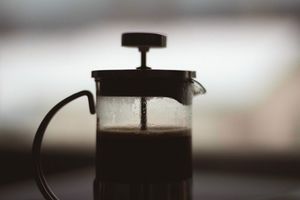
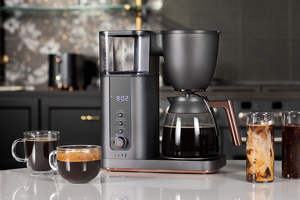
If coffee is brewed in different ways — in a cup, a French press, a drip coffee maker, moka, V60, Kalita, Cafflano Kompresso, or in a thermos — the more logical option is ground decaf coffee with a grind adapted for different scenarios.
ENERGY FLOW Decaf Coffee 120 g
Frequently Asked Questions
Is decaf coffee just coffee for the evening?
No. The evening is only one natural use case. In reality, decaf is useful any time someone wants to distribute caffeine differently across the day.
Why are people choosing decaf more often today?
Because more and more people are looking not just at the number of cups, but at their total caffeine intake across the day. In that logic, decaf has become not a concession, but a convenient and appropriate option.
Does decaf mean giving up regular coffee completely?
No. Most often, it is not about giving it up, but about a different caffeine distribution: one cup may stay regular, another may already be decaf.
What should I choose: drip coffee or ground decaf coffee?
For one cup without equipment, choose a drip bag. For broader use throughout the day, choose ground decaf coffee suited to different brewing methods.