How to store ground coffee to keep its aroma longer
Ground coffee is not only about choosing the right product. It also needs to be stored properly after opening. This is where many people lose part of the flavour before brewing: coffee stays open for too long, comes into contact with air, absorbs moisture or picks up unwanted odours.
Ground coffee loses aroma faster than whole bean coffee because grinding increases the surface area exposed to air. This does not mean that ground coffee is a bad format. It means that packaging, storage conditions and how quickly the coffee is used after opening matter more.
What damages ground coffee the most
There are four main factors that make ground coffee lose aroma and flavour faster:
- air — coffee oxidises and gradually loses aromatic compounds;
- moisture — damages the product and can change the taste before brewing;
- light — speeds up unwanted changes in the product;
- heat — accelerates aroma loss.
So the main task is simple: after opening, reduce the coffee’s contact with air, moisture, light, heat and strong odours.
Where to store ground coffee
The best place to store ground coffee is a dry, dark and cool cupboard, away from the stove, oven, radiator, window, sink and areas with high humidity.
You should not leave coffee:
- on a kitchen counter under direct light;
- near the stove or oven;
- next to the sink;
- in an open pack;
- near spices or strongly scented foods.
Coffee easily absorbs surrounding odours, so the storage place should be not only dry, but also neutral in smell.
What to store ground coffee in
The best option is to keep coffee in its original opaque packaging, if it closes properly and has a resealable zip closure. This type of packaging helps protect the product from light, air and unwanted odours.
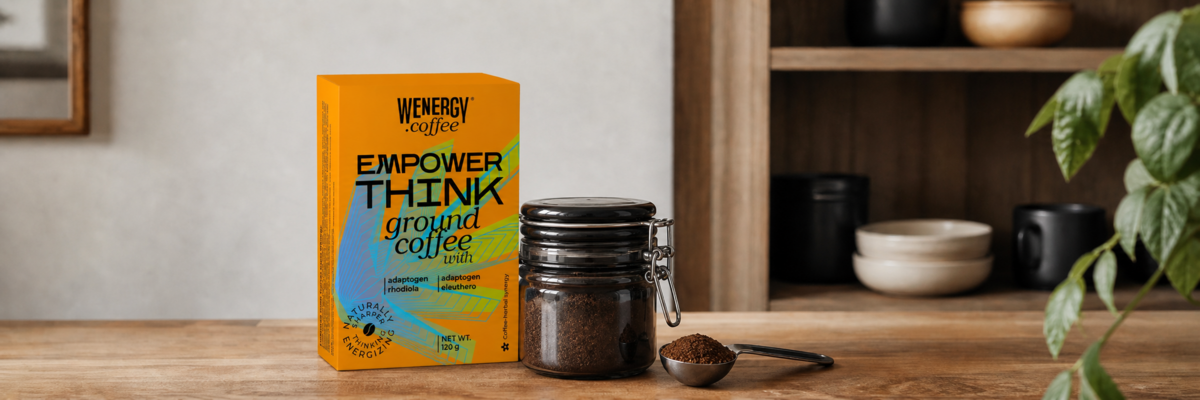
If the pack does not close tightly, you can transfer the coffee to an airtight container. Glass, ceramic or metal jars with tight lids work best. The container should be clean, dry and free from its own smell.
Plastic containers should be used with caution: they are not always airtight enough and may absorb or transfer odours. Paper bags and cardboard boxes are suitable only for short-term storage if there is an additional protective bag inside.
The main point is not the jar itself, but how well it protects the coffee from air, moisture, light and unwanted odours.
Can ground coffee be stored in the fridge or freezer?
The fridge is a poor place for ground coffee. It contains moisture, temperature changes and strong food odours. Coffee absorbs them easily, so after this kind of storage the taste can become worse even before brewing.
The freezer is a separate case. It can only be considered for long-term storage if the coffee is sealed tightly and divided into portions. But for everyday use, the freezer is inconvenient: frequent opening, temperature changes and condensation are harmful to ground coffee.
It is more practical to keep coffee in a dry, dark and cool place with a stable temperature — for example, in a kitchen cupboard away from the stove, sink and window.
Why a smaller pack makes sense
For ground coffee, a smaller format is not just about convenience. After grinding, coffee comes into contact with air more quickly, and after opening the pack this process becomes stronger. That is why it is more practical to buy an amount you can actually use without long storage.
The longer a pack stays open, the more aroma is lost. A large pack may seem better value, but if it stays open for a long time, part of the flavour is lost before brewing.
This is why a 120 g format makes sense for everyday use: the coffee is easier to use more quickly after opening, without keeping a large pack open for weeks.
How to handle the pack after opening
After opening, it is best to follow a few simple rules:
- close the pack tightly after each use;
- do not leave the pack open for long;
- do not use a wet spoon to scoop coffee;
- do not keep the product near heat sources;
- do not transfer coffee into a container that has its own smell;
- use the coffee within a realistic time after opening.
These are simple things, but they have the strongest effect on how the coffee tastes in the cup a few days after opening the pack.
How storing ground coffee differs from storing whole bean coffee
Whole bean coffee usually keeps its aroma longer because the intact bean has less contact with air. Ground coffee is more sensitive, so storage conditions matter more.
This does not make ground coffee a weak choice. It simply means that it is better to buy it in a convenient volume, close it tightly after opening and avoid keeping it open for too long.
For a broader comparison of formats, see “Ground coffee or whole bean coffee: what to choose”.
What this means when buying ground coffee
When buying ground coffee, it is important to look not only at the variety or taste, but also at whether the pack will be convenient for you after opening. For home or office use, a format that does not stay open for too long is often more practical.
So when choosing ground coffee, the logic is simple:
- the right grind for your brewing method;
- a clear composition;
- a practical pack size;
- storage conditions you can realistically provide.
If you need a general selection guide, see “Ground coffee: how to choose natural coffee”.
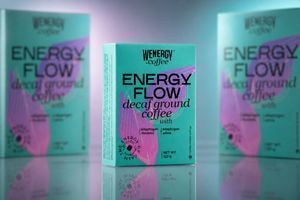
WEnergy coffee: why pack size matters here
At WEnergy coffee, the ground coffee format is connected not only with the brewing method, but also with practical everyday use. If coffee has already been ground for a specific method, it makes sense to pack it in a way that helps the buyer use it more quickly after opening.
EMPOWER THINK filter coffee, 120 g, ground for a drip coffee maker is a format for those who want a ready filter grind and want to use coffee without adjusting the grind separately.
The customer benefit is that it is easier to preserve quality after opening. The use case is home, office, work, study and daily tasks. The product combines selected coffee, a ready grind for a drip coffee maker and Ukrainian adaptogenic herbs. The practical benefit is fewer technical brewing mistakes and a convenient coffee format for a busy day.
Questions and answers
Why does ground coffee lose aroma faster?
After grinding, coffee has a larger surface area exposed to air. As a result, aromatic compounds are lost faster than in whole bean coffee.
Where is the best place to store ground coffee?
In a dry, dark and cool place, away from light, heat, moisture and strong odours. The simplest option is a kitchen cupboard that is not near the stove or sink.
Do you need a jar for ground coffee?
Only if it is airtight, clean, dry and odour-free. If the original pack closes well, it can also be used.
Should ground coffee be kept in the fridge?
In most cases, no. A fridge adds moisture, food odours and temperature changes, which are poor conditions for ground coffee.
Can ground coffee be frozen?
For everyday use, this is inconvenient and risky because of condensation and temperature changes. The freezer can only be considered for long-term storage if the coffee is tightly sealed and divided into portions.
Why is a smaller pack more convenient?
Because it is easier to use more quickly after opening. For ground coffee, this matters because aroma gradually fades after contact with air.
How can you tell that ground coffee has gone bad?
If the coffee has an unpleasant or foreign smell, has become damp, has changed in appearance or shows signs of mould, it should not be used.
What to do in practice
If you bought ground coffee, keep it simple. Store it in a dry, closed place, seal the pack tightly after use and do not leave the product open for long.
If you need a ready filter grind in a convenient format for everyday use, consider EMPOWER THINK filter coffee, 120 g.