
Decaf coffee is coffee that has had most of its caffeine removed at the green bean stage. The caffeine is not eliminated completely, but the amount is much lower than in regular coffee. That is why decaf is not a different drink and not a substitute for coffee. It is the same product with a different caffeine level.
The Short Answer: What Decaf Coffee Is
In simple terms, decaf is coffee with significantly less caffeine. People do not choose it because it is “not real coffee,” but because it solves a different problem: it keeps the taste and format of coffee while reducing the amount of caffeine in the cup.
Key Facts About Decaf
- Decaf is regular coffee that has been decaffeinated before roasting.
- The caffeine is not reduced to zero, but lowered substantially.
- The most common decaffeination methods are solvents, Swiss Water, and CO₂.
- Decaf comes in whole bean, ground, capsule, and drip bag formats.
- The right choice does not start with the word “decaf,” but with the brewing method.
How Much Caffeine Remains in Decaf
A common mistake is to assume that decaf means no caffeine at all. That is not the case. Decaf still contains caffeine, but only in a very small amount.
| Type of coffee | Caffeine level |
|---|---|
| Regular coffee | naturally much higher caffeine content |
| Decaf coffee | significantly reduced caffeine content |
In the US, decaffeinated coffee is defined as coffee with at least 97% of its caffeine removed, while in Europe the threshold is at least 99%. So the more accurate description is not “caffeine-free coffee,” but coffee with a significantly reduced caffeine content.
How Caffeine Is Removed from Coffee
Decaffeination is done at the green coffee stage. The overall logic is simple: the beans are prepared for processing, the caffeine is separated, and then the beans are cleaned and dried back to a normal workable state.
One common approach looks like this: the beans are treated with water or steam, then a medium is used to extract the caffeine, and after that the beans are cleaned and dried. For the buyer, what matters is not the name of the method itself, but the outcome: how much caffeine was removed and how well the flavor was preserved.
Which Decaffeination Methods Are Used
In practice, the three main groups of methods are these:
Ethyl Acetate or Other Solvent Methods
This is one of the most common approaches. Its strength is efficient caffeine removal with minimal impact on the flavor profile when the process is done properly.
Swiss Water
This is a solvent-free method. It is valued for its water-based processing logic and for fitting the demand for a cleaner, easier-to-understand process.
Supercritical CO₂
This is a more complex and more expensive method. Its strength is precise process control and careful handling of flavor and aroma compounds.
Read more: coffee decaffeination methods
Is Decaf Coffee Safe?
Yes. Modern decaf coffee is a normal food product, not some questionable alternative. There are plenty of myths around it, but what matters to the buyer is not fear of words like “solvent.” What matters is the final result in the finished product.
Practically speaking, decaf is full coffee with a much lower caffeine content. That is why it should be judged as coffee: by taste, by format, by brewing method, and by whether it fits your specific use case.
Does Decaf Taste Different from Regular Coffee?
Yes, it can. Any decaffeination process changes the bean. But modern methods preserve flavor and aroma much better than they used to.
So the right comparison is not “does it have flavor or not,” but “how well does this particular decaf preserve its profile in the cup.”
Who Decaf Coffee Is For
- People who want to reduce caffeine without giving up coffee.
- People who want to keep the taste of coffee later in the day.
- People who want a more predictable coffee routine.
- People choosing not between “coffee or no coffee,” but between different caffeine levels in the cup.
When It Makes Sense to Choose Decaf
Decaf makes sense when the goal is not just to change the recipe, but to reduce the caffeine content in the cup itself. If that is the goal, decaf is a more direct solution than simply using a smaller dose or changing the brewing method while keeping the same bean.
Read more: decaf coffee or regular coffee
Which Decaf Format to Choose
The word “decaf” alone does not answer the question of what to buy. Here, format and brewing method matter.
- If you have a good grinder and want control, whole bean coffee makes sense.
- If you have a drip coffee maker and want a ready daily format, ground coffee for filter brewing is the more practical option.
- If you want a single cup without a coffee maker and without grinding separately, the most direct format is a drip bag.
Read more: how to choose decaf coffee
Read more: whole bean or ground decaf coffee
Decaf Drip Coffee: A Ready Format Without a Coffee Maker
If you want one cup without scales, without a grinder, and without any extra setup, a drip bag is the most direct option. It is not “simplified coffee.” It is a single-serve format where convenience is part of the product’s value.
For that use case, WEnergy coffee offers ENERGY FLOW Decaf Drip Coffee.
Decaf Coffee for a Drip Coffee Maker
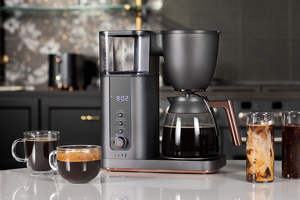
If you have a drip coffee maker at home or in the office, the most direct solution is ground decaf coffee for filter brewing. In that case, there is no need to solve the grind question separately.
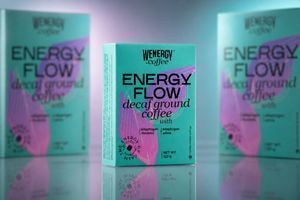
For that use case, WEnergy coffee offers ENERGY FLOW Decaf Filter Coffee 120 g — ground caffeine-free coffee for drip coffee makers.
Read more: how to brew ground decaf coffee in a drip coffee maker
Frequently Asked Questions About Decaf Coffee
Is decaf coffee caffeine-free?
In everyday language, that is how people often describe it. But technically, it is more accurate to say that decaf has a significantly reduced caffeine content rather than zero caffeine.
Does decaf still contain caffeine?
Yes. It does, but in a much smaller amount than regular coffee.
Is decaf coffee safe?
Yes. It is full coffee and should be judged as a product: by taste, by format, and by whether it fits your needs.
Which is better: whole bean or ground decaf coffee?
Not “better in general,” but better for your brewing method. If you want control and have a good grinder, choose whole bean. If convenience matters more and you have a drip coffee maker, choose ground coffee for filter brewing.
What should I choose for daily use?
If you want one cup without equipment, choose a drip bag. If you have a drip coffee maker, choose ground decaf coffee for filter brewing.